5.3 Traditional Animation?
5.4 Computer Animation
5.5 File Formats
5.6 Creating Animation



Universiti Teknologi MARA
5.3 Traditional Animation?
5.4 Computer Animation
5.5 File Formats
5.6 Creating Animation
4.1 Introduction to Sound
4.2 Multimedia System Sound
4.3 Digital Audio
4.4 MIDI Audio
4.5 Comparing Digital to MIDI Audio
4.6 Creating and Editing Digital Audio Files
4.7 MIDI versus Digital Audio
4.8 File Formats
4.9 Applying Sound to Multimedia Project


3.1 Beginning to Create Images
3.2 Creating Still Images
3.3 Understanding Colors
3.4 File Formats


2.1 Importance of Text
2.2 Attribute of Text
2.3 Usage of Text in Multimedia
2.4 Usage of Text in Computer
2.5 Font Editing and Design Tools


1.1 Basic definition
1.2 Media of Delivery
1.3 Common Usage of Multimedia
1.4 Understanding Virtual Reality


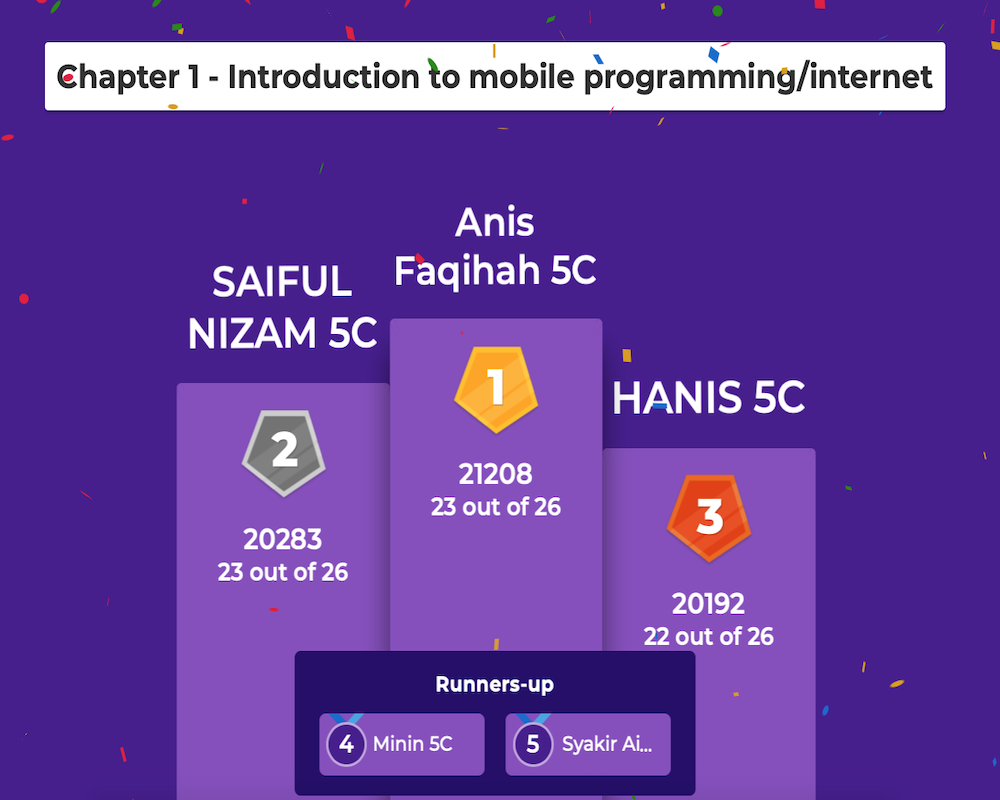
Chapter 1 – Introduction to Mobile Programming
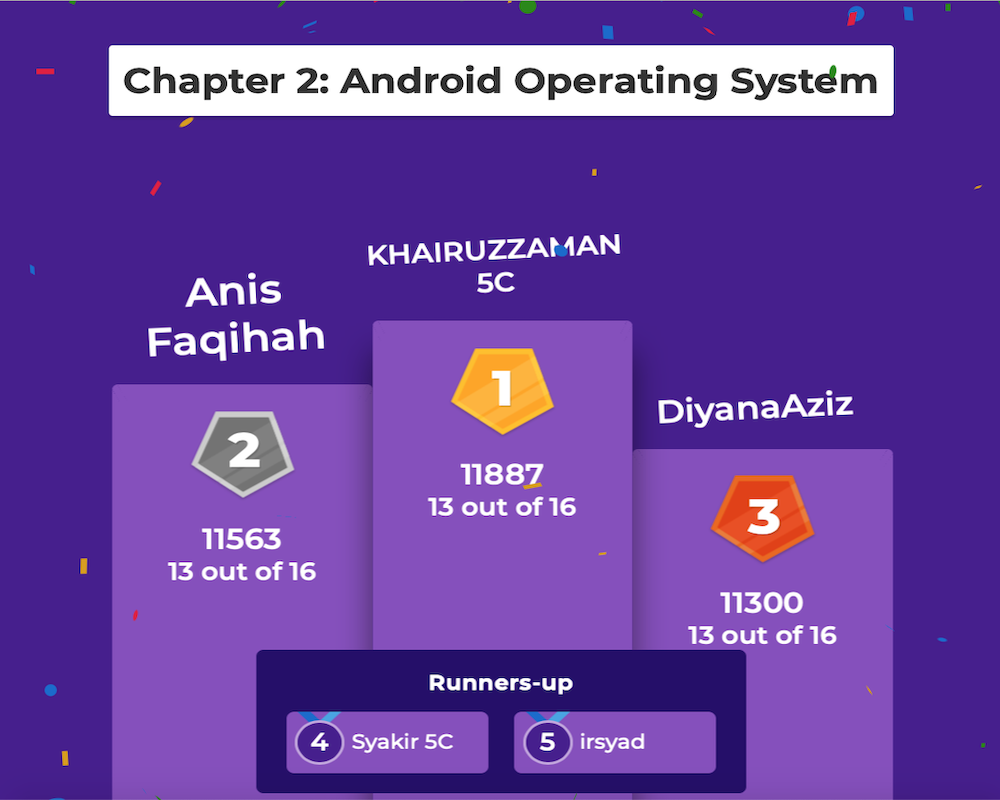
Chapter 2 – Android Operating Systems
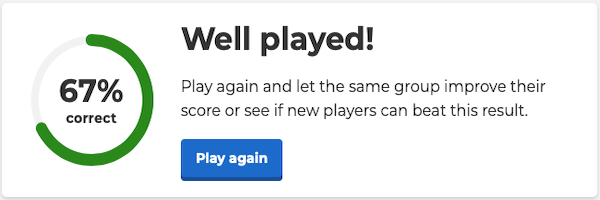
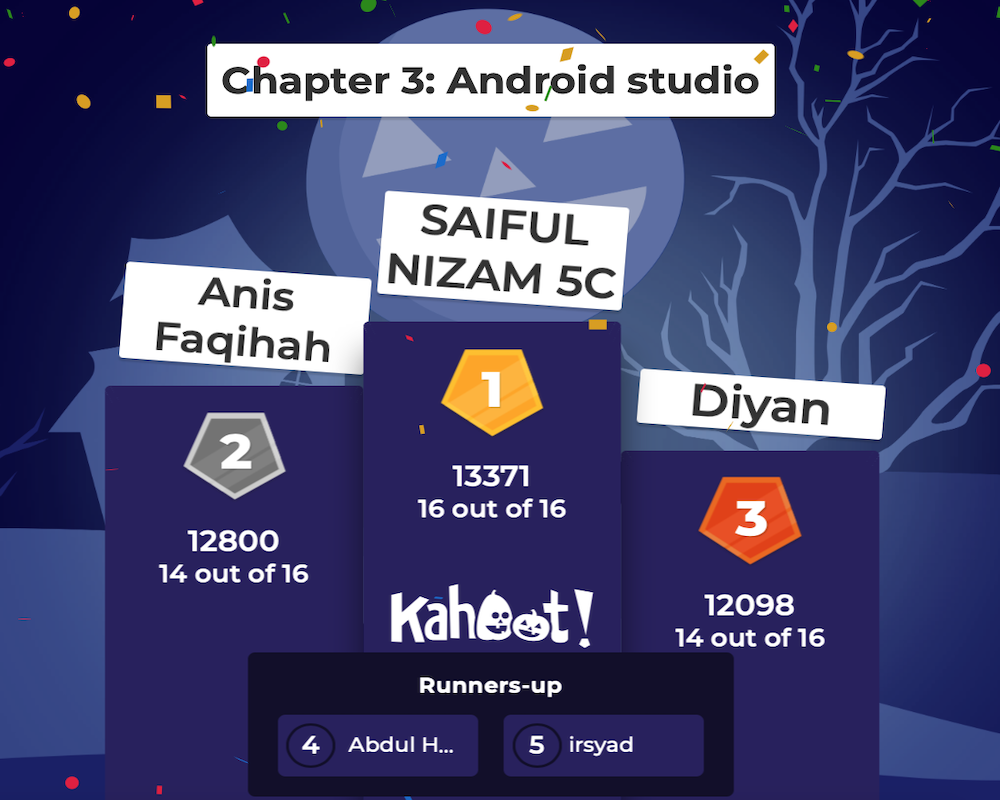
Chapter 3 – Android studio
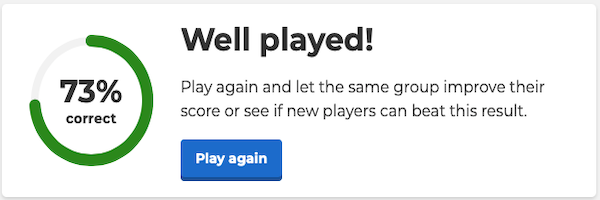
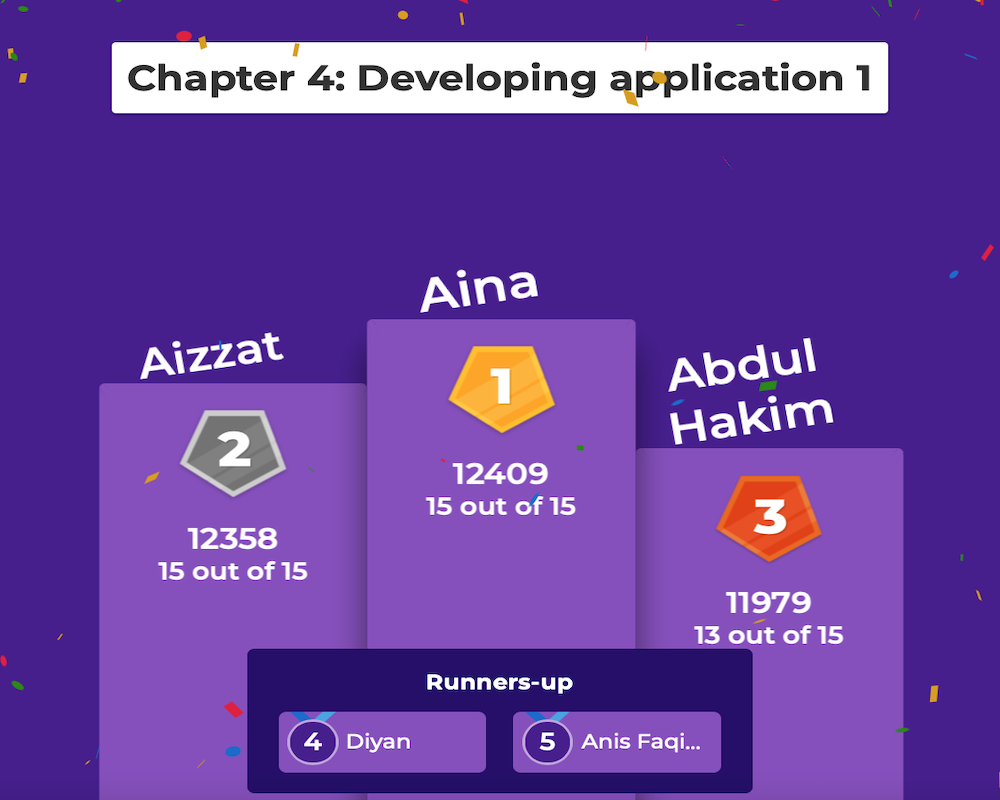
Chapter 4 – Developing Application I
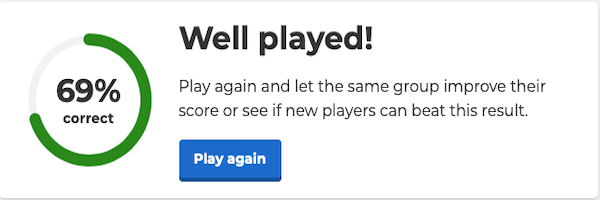
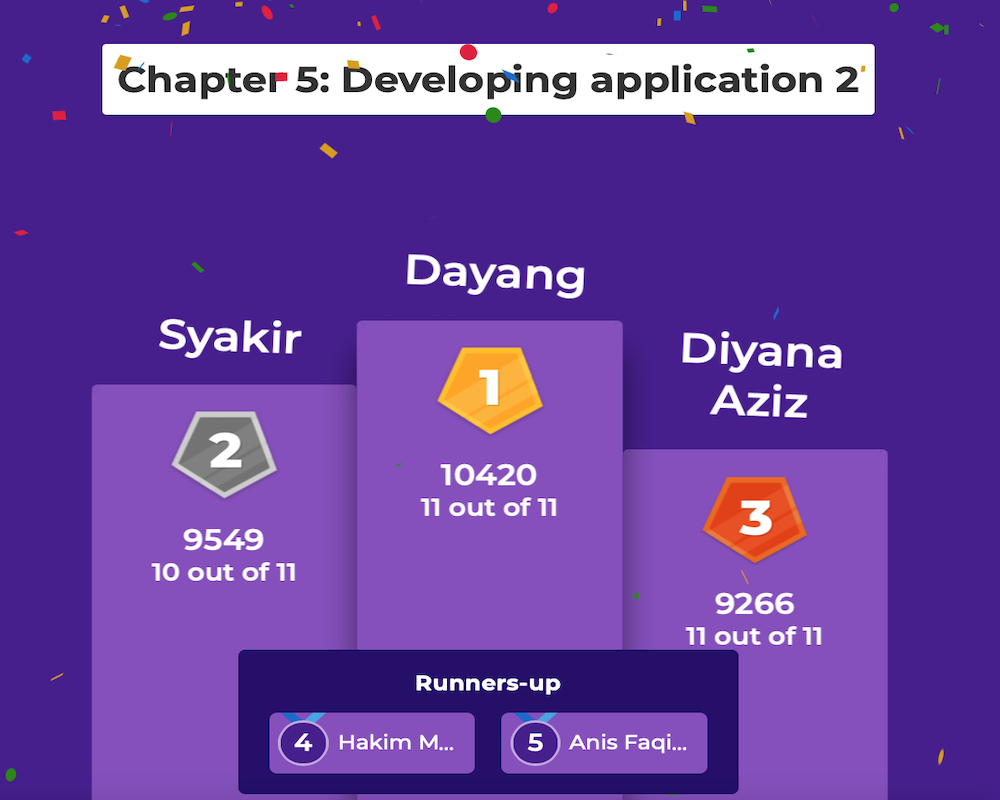
Chapter 5 – Developing Application II
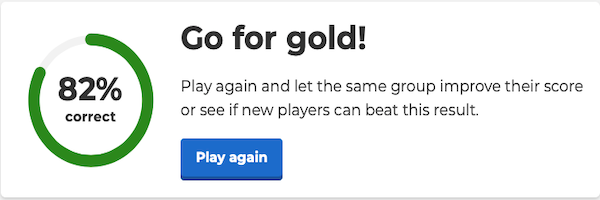
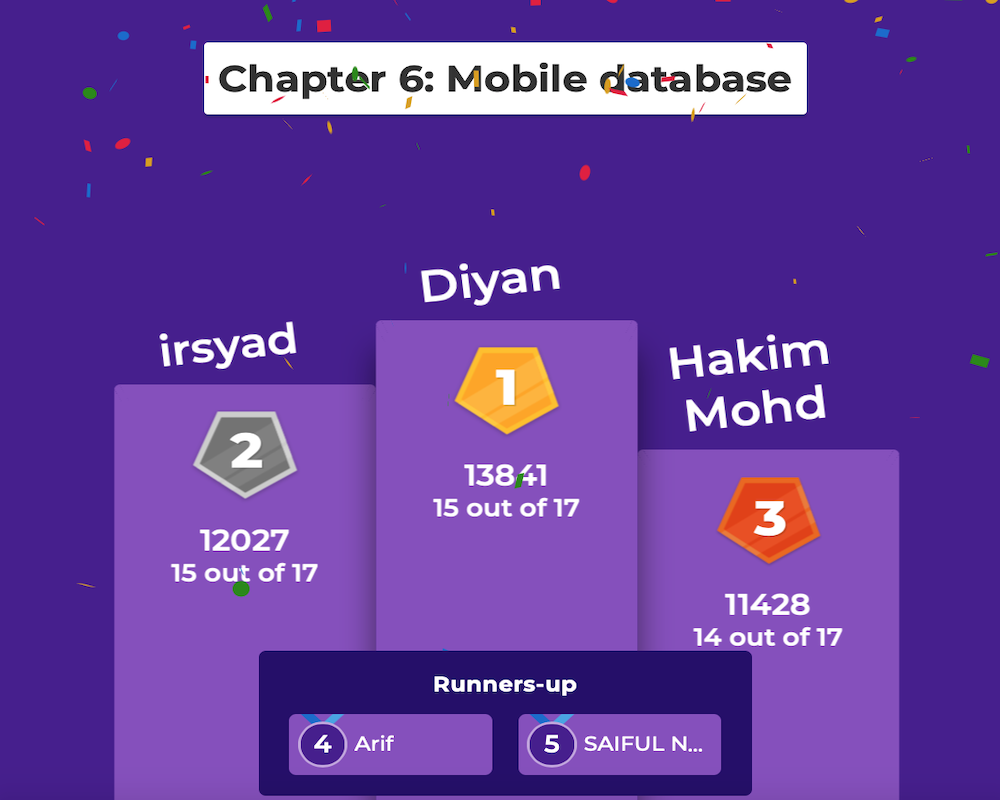
Chapter 6 – Mobile Database
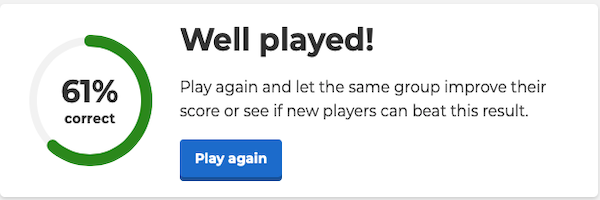
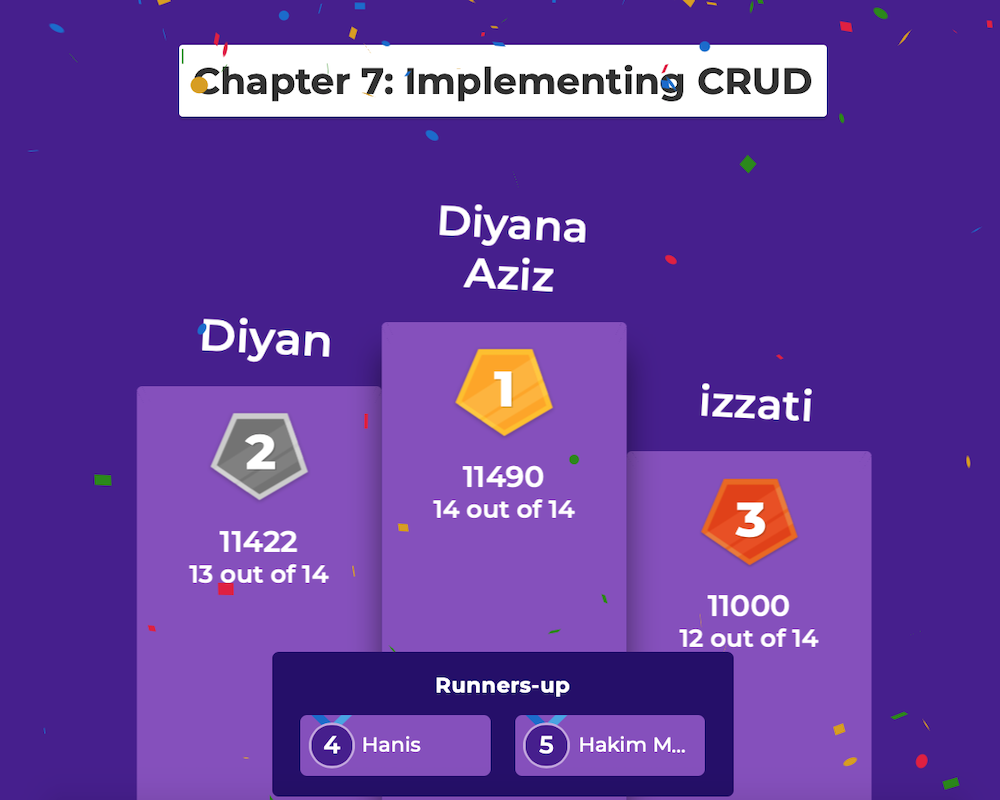
Chapter 7 – Implementing CRUD
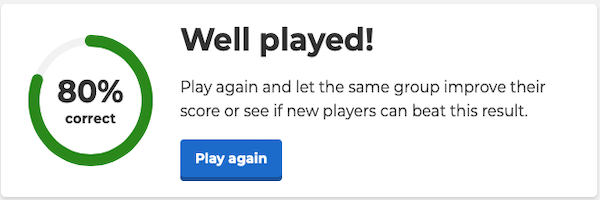
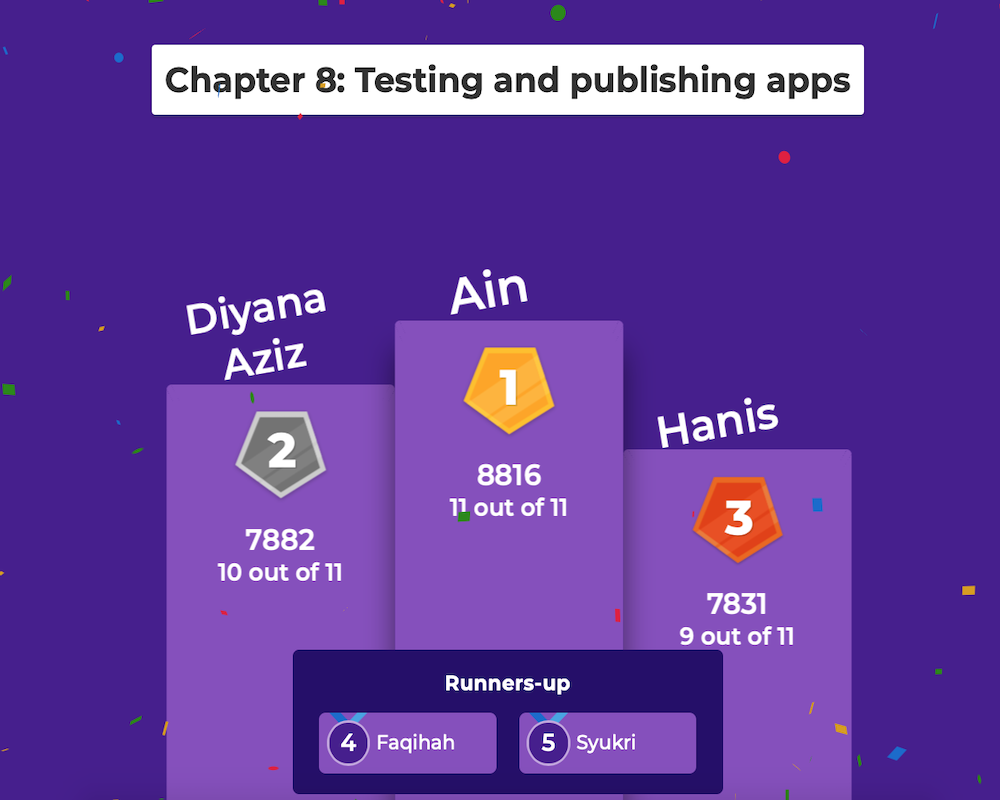
Chapter 8 – Testing and Publishing Apps
Lab Assignment : 30%
Group Project : 30%
Final test : 40%
Total: 100%
Passing grade : C ( 50 % )
Date: 05/1/2027 (Wednesday)
Time: 10.15 – 11.15 am
Duration: 2 Hours (excluding submission time 10 minutes)
Chapter 1-7
Type:
Part A – Objective- (20 questions) – 20 marks (Close book)
Part B – Subjectives (2 short questions) – 30 marks (Open book for Part B (Question 2 only)
Just type your answer in the paper and attach it as .pdf file in UFuture.
Hint: Code the xml and java file.
GOOD LUCK 🙂
This lab assignment is an individual assignment. Students can discuss and refer to any related resources as long as they manage to design and develop the mobile app by themselves. In this lab assignment, students are required to use Android Studio IDE.
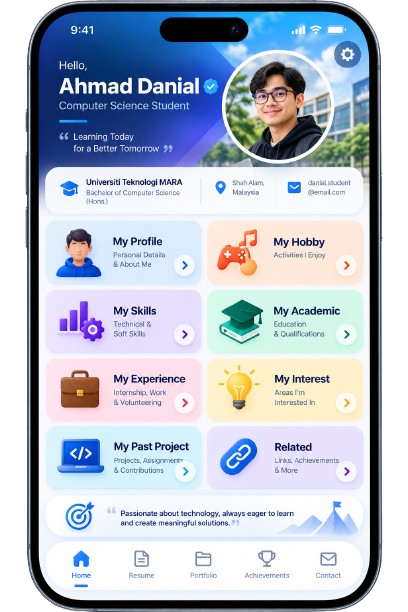
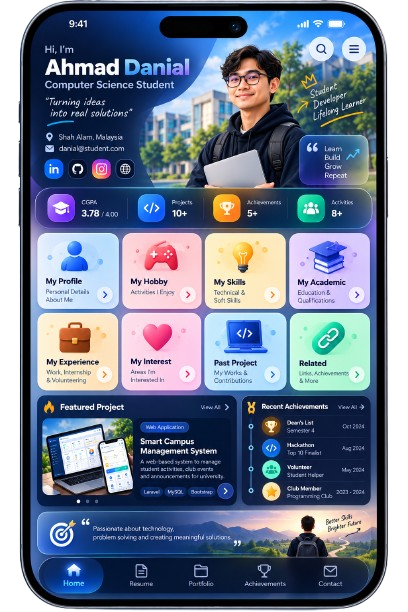
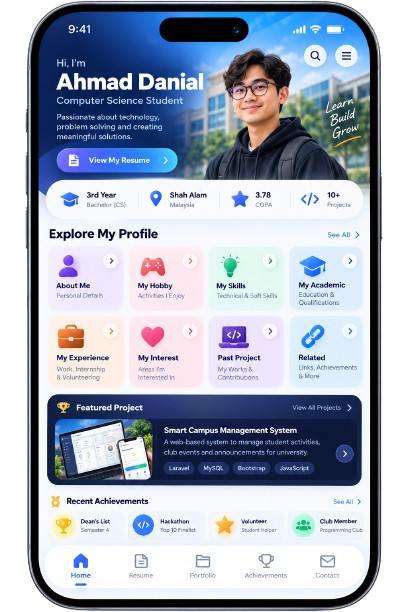
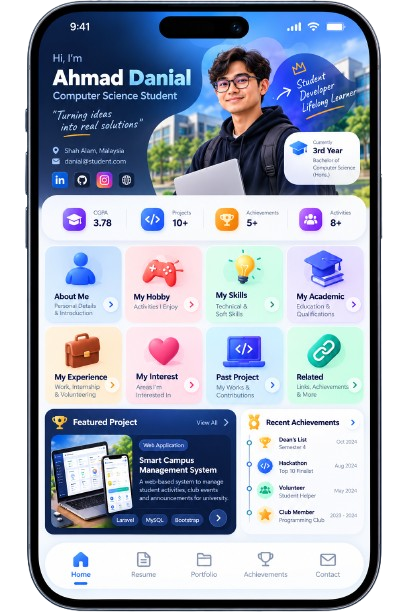
This lab assignment is about personal app. It is meant that students can share information about themselves such as:
Note: Please use your own creativity to develop the above pages.
It also has quick links to personal social media platform.
App icon and splash screen should be included.
There are several elements to take into the consideration in developing the mobile app.
Appendix: The example of the mobile application pages are shown as below:
What to submit:
Put both of the files in the google drive and share the link in the UFuture (I will create the assignment in UFuture later).
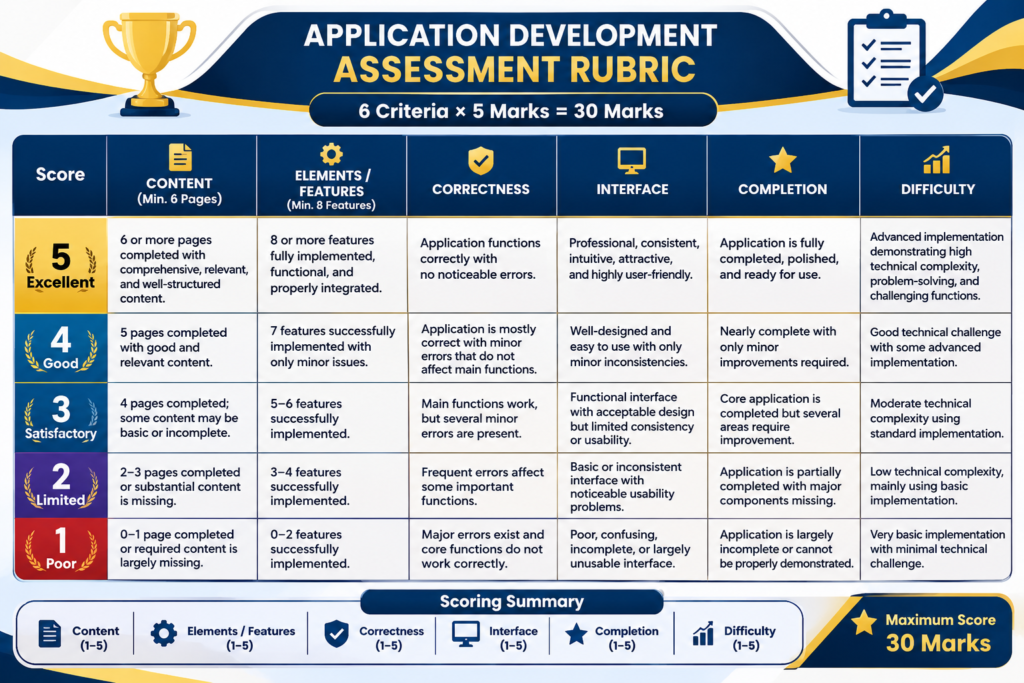
The evaluation rubric
Group project requirement
This group project is especially designed as a platform for students to improve their soft skills such as logical thinking, critical thinking, problem solving, programming and esprit de corps. The ideal group size is 4 – 5 members. It is recommended that the group size is as small as possible. By doing this, perhaps each student will give full commitment to the project. This is to make sure that there is no sleeping partners in the group. A project leader is appointed and responsible to the success of the group.
The time duration of the group project is seven weeks starting from assigning the project title until the project presentation.
Each group is required to provide with the followings:
Report
Format:
Content
Application
Please ensure that the mobile application adheres to the following conditions:
Implementation
The evaluation rubric
| 5 – 4 marks | 3 – 2 marks | 1 – 0 mark | |
| 1. Organization | The contents are organized and explained very well | The contents are less organized and explained | The contents are notorganized and explained at all |
| 2. Contribution | All requirements and objectives are identified, evaluated and completed | All requirements are identified and evaluated but some objectives arenot completed | Many requirements and objectives are not identified, evaluatedand/or completed |
| 5 – 4 marks | 3 – 2 marks | 1 – 0 mark | |
| 1. UserInterface | Interface is neat and well organized | Interface is reasonably neat | Interface is untidy and not organized |
| 2. Run without error | Runs smoothly and without errors | Runs but with some errors | Still contain error or warning |
| 3. Correctness | Application is according to theoriginal proposal and givescorrect output | Application follows the original partially or givessome incorrect output | Application is completely incorrect |
| 4. Database | CRUD functions for at least one table without errors | CRUD functions for at least one table with some errors | No database used at all |
The full marks are 30 marks in which 10 marks for the report and 20 marks for the mobile app.
This course introduces students to mobile programming technologies for designing, developing, and publishing mobile applications across multiple platforms. It provides fundamental knowledge and techniques for leveraging device capabilities, adhering to current technologies and standards, implementing security measures, and working with various mobile operating system software development kits (SDKs). Emphasis is placed on building efficient, secure, and user-friendly mobile applications while fostering entrepreneurial and analytical skills. By the end of the course, students will be able to analyze mobile programming frameworks to support diverse online communities, build efficient and secure mobile applications for multiple devices, and demonstrate entrepreneurial skills in mobile application analysis. Teaching methods include lectures, laboratory sessions, and discussions, while assessments consist of tests, assignments, and group projects.
At the end of the course, students should be able to:
| Topic | Remarks |
|---|---|
| WEEK 1 (28/09/26-02/10/26) Chapter 1 – Introduction to Mobile Programming 1.1 Internet and networking 1.2 HTML and CSS 1.3 XML 1.4 Java 1.5 Mobile Apps architecture 1.6 Mobile Apps vs. Web Apps 1.7 Android vs. IOS | Start Entrance Survey (28 September) Lecture 1:: Ebooks Lab 1: Installation of Android studio |
| WEEK 2 (05/10/26-09/10/26) Chapter 1 – Introduction to Mobile Programming 1.1 Internet and networking 1.2 HTML and CSS 1.3 XML 1.4 Java 1.5 Mobile Apps architecture 1.6 Mobile Apps vs. Web Apps 1.7 Android vs. IOS | Lecture 2: Introduction to Mobile Programming Lab 2: Develop my first app |
| WEEK 3 (12/10/26-16/10/26) Chapter 2 – Introduction to Android Operating Systems 2.1 History 2.2 Features 2.3 Version 2.4 Android architecture | End Entrance Survey Lecture 2: Android Operating Systems Lab 3: XML and layout in Andriod |
| WEEK 4 (19/10/26-23/10/26) Chapter 2 – Introduction to Android Operating Systems 2.1 History 2.2 Features 2.3 Version 2.4 Android architecture | Start Lab assignment – 30% Lecture 3: Android studio Lab 4: UI view in Android |
| WEEK 5 (26/10/26-30/10/26) Chapter 3 – Android studio 3.1 Getting Started 3.2 First Application 3.3 Project Structure (manifests, java, res and build.gradle) 3.4 Activities, Fragment, Services, Intent and UI Widgets 3.5 Layouts 3.6 Containers 3.7 Menu | Lecture 4: Developing Application I Lab 5: Android widgets |
| WEEK 6 (02/11/26-06/11/26) Chapter 3 – Android studio 3.1 Getting Started 3.2 First Application 3.3 Project Structure (manifests, java, res and build.gradle) 3.4 Activities, Fragment, Services, Intent and UI Widgets 3.5 Layouts 3.6 Containers 3.7 Menu | Lecture 5: Developing Application II Lab 6: Andriod navigation |
| WEEK 7 (09/11/26-13/11/26) Chapter 4 – Developing Application I 4.1 Layouts (Linear Layout, Relative Layout) 4.2 UI Widgets (TextView, EditText, Button, ImageView, 4.1 4.3 RadioButton, CheckBox, Spinner, ScrollView) 4.4 Event Handling and Event Listener 4.5 Fragment and Intent 4.6 Toast (Simple Toast) 4.7 Containers (WebView) | Project briefing (Create groups) Submit lab assignment – 30% (5/12/2021) Start group project – 30% Lecture 6: Mobile Database Lab 7: Android database(SQLite) |
| WEEK 8 (16/11/26-20/11/26) Chapter 4 – Developing Application I 4.1 Layouts (Linear Layout, Relative Layout) 4.2 UI Widgets (TextView, EditText, Button, ImageView, 4.1 4.3 RadioButton, CheckBox, Spinner, ScrollView) 4.4 Event Handling and Event Listener 4.5 Fragment and Intent 4.6 Toast (Simple Toast) 4.7 Containers (WebView) Test 1 – (20%) | Lecture 7: Implementing CRUD Lab 8: SQLite CRUD |
| WEEK 9 (23/11/26-27/11/26) Chapter 5 – Developing Application II 5.1 Menu (Option Menu) 5.2 Navigation (Up Button/Back Button) 5.3 Data Storage (SharedPreference) 5.4 Date and Time (DatePicker, TimePicker) 5.5 Notification (Simple Notification) Chapter 7 – Implementing CRUD 7.1 Login and Logout and registration 7.2 Add, Retrieve, Update & Delete Operations 7.3 Reporting 7.4 Searching | Project proposal submission (17/12/2021) Lecture 8: Testing and Publishing Apps Lab 10: Testing and publishing |
| WEEK 10 (30/12/26-04/1/26) Chapter 5 – Developing Application II 5.1 Menu (Option Menu) 5.2 Navigation (Up Button/Back Button) 5.3 Data Storage (SharedPreference) 5.4 Date and Time (DatePicker, TimePicker) 5.5 Notification (Simple Notification) | Start Student Feedback Online (SuFO) Lecture 9: Revision activities Lab 10: |
| WEEK 11 (07/12/26-11/12/26) Chapter 6 – Mobile Database 6.1 Introduction to SQLite Database 6.2 Database design 6.3 Database connection 6.4 Database access using SQL Group project preparation | Lecture 11: Revision activities Lab 11: Project preparation |
| WEEK 12 (14/12/26-18/12/26) Chapter 6 – Mobile Database 6.1 Introduction to SQLite Database 6.2 Database design 6.3 Database connection 6.4 Database access using SQL Group project preparation | Lecture 12: Revision activities Lab 12: Project preparation |
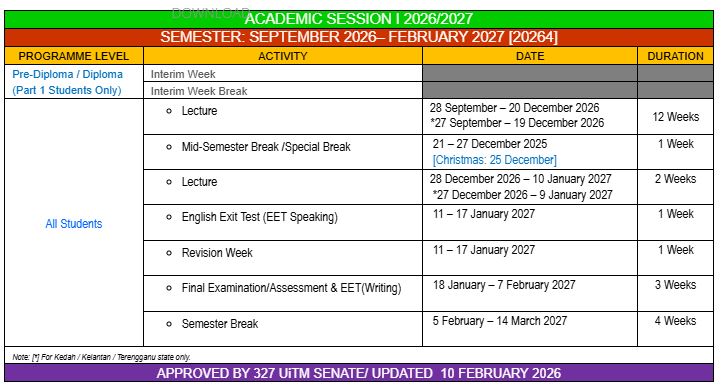
| (21/12/26 – 27/12/26) | Mid semester break |
| WEEK 13 (28/12/26-01/01/27) Chapter 7 – Implementing CRUD 8.1 Login and logout 8.2 Registration 8.3 Create, read, update, delete Group project preparation | Lecture 12: Revision activities Start Exit Survey (17-30 January 2021) Start Exit Student Feedback Online (SuFO (20/12/2021 – 6/2/2022) Lab 13: Project preparation |
| WEEK 14 (04/01/27-08/01/27) Chapter 7 – Implementing CRUD 8.1 Login and logout 8.2 Registration 8.3 Create, read, update, delete Testing and Publishing Apps – Mobile application and delivery – Testing mobile application – Application distribution Test 2 – (20%) | Lecture 14: Revision activities Test 2 – (2/1/2027) (40%) End Exit Survey End Exit Student Feedback Online (SuFO) Project preparation Lab 14: Project preparation |
| (09/01/27 – 17/1/2027) Group project presentation | Submit group project – 30% (31/1/2027) Group project presentation (3-4/2/2027) Study week |