Archive October 2, 2023

KAHOOT CHAMPION (CSC 584)-20234

Capture picture

Course introduction

1 KAHOOT CHAMPION (CSC 584)-20234
11-1 KAHOOT CHAMPION (CSC 584)-20234
Screenshot-2023-10-03-at-4.29.30-PM KAHOOT CHAMPION (CSC 584)-20234
Screenshot-2023-10-03-at-4.29.06-PM-2 KAHOOT CHAMPION (CSC 584)-20234

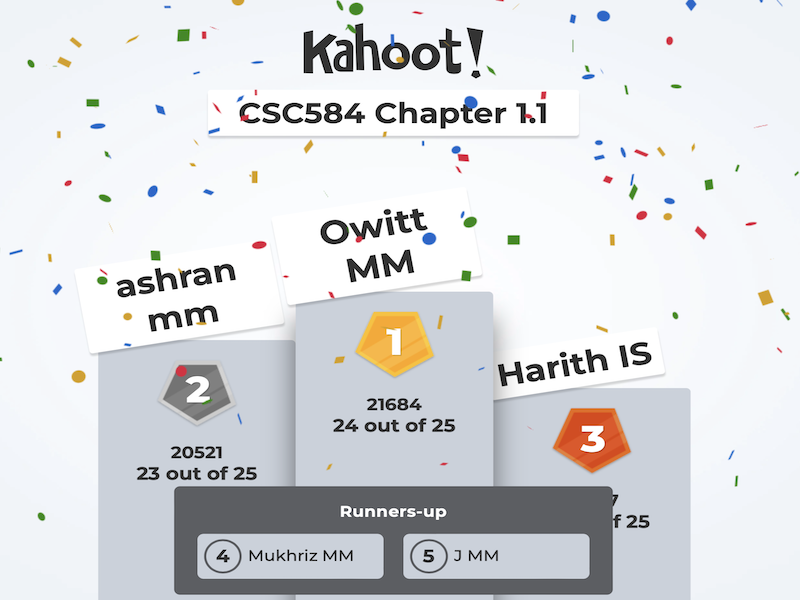
Chapter 1.1 – Review of Object Oriented Programming Concepts

2 KAHOOT CHAMPION (CSC 584)-20234
1-1 KAHOOT CHAMPION (CSC 584)-20234
4 KAHOOT CHAMPION (CSC 584)-20234
3 KAHOOT CHAMPION (CSC 584)-20234

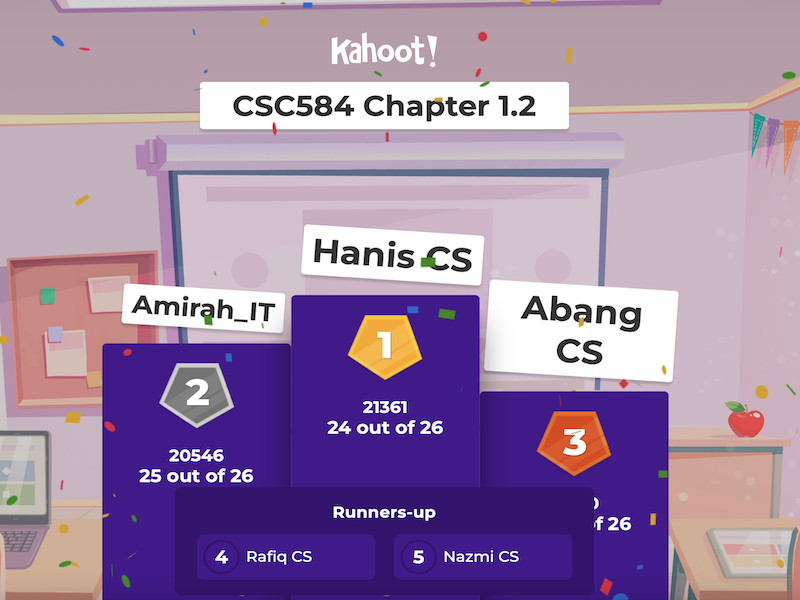
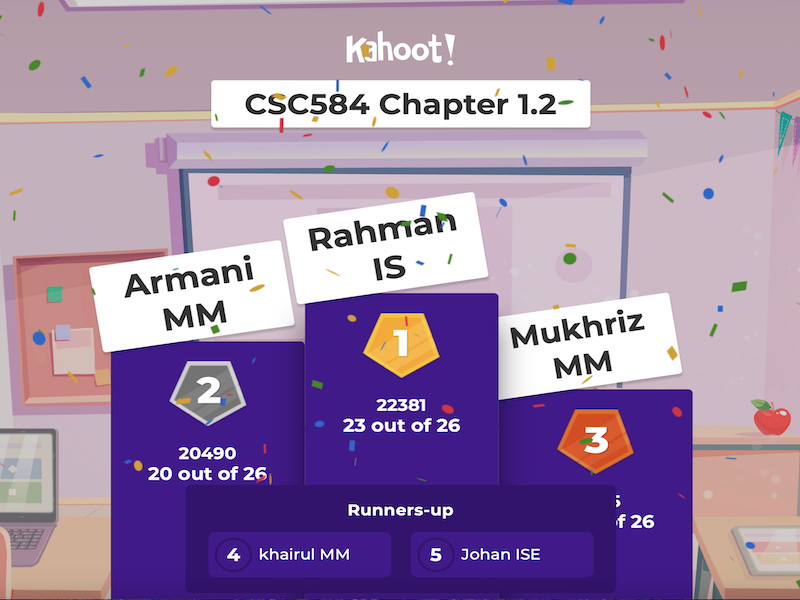
Chapter 1.2 – Review of Object Oriented Programming Concepts (Inheritance)

11-2 KAHOOT CHAMPION (CSC 584)-20234
1-2 KAHOOT CHAMPION (CSC 584)-20234
22 KAHOOT CHAMPION (CSC 584)-20234
2-1 KAHOOT CHAMPION (CSC 584)-20234

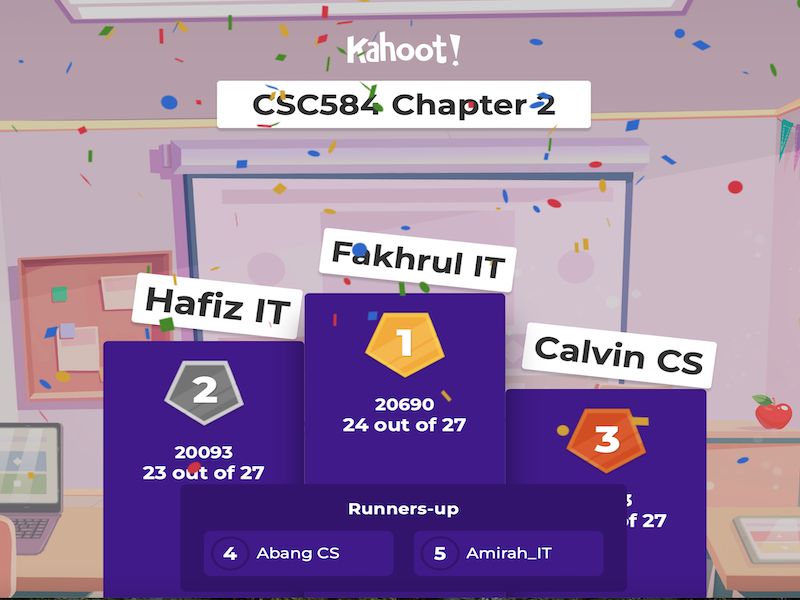
Chapter 2 – Introduction to Java Enterprise Edition (Java EE)

11-3 KAHOOT CHAMPION (CSC 584)-20234
1-3 KAHOOT CHAMPION (CSC 584)-20234
222 KAHOOT CHAMPION (CSC 584)-20234
2-2 KAHOOT CHAMPION (CSC 584)-20234

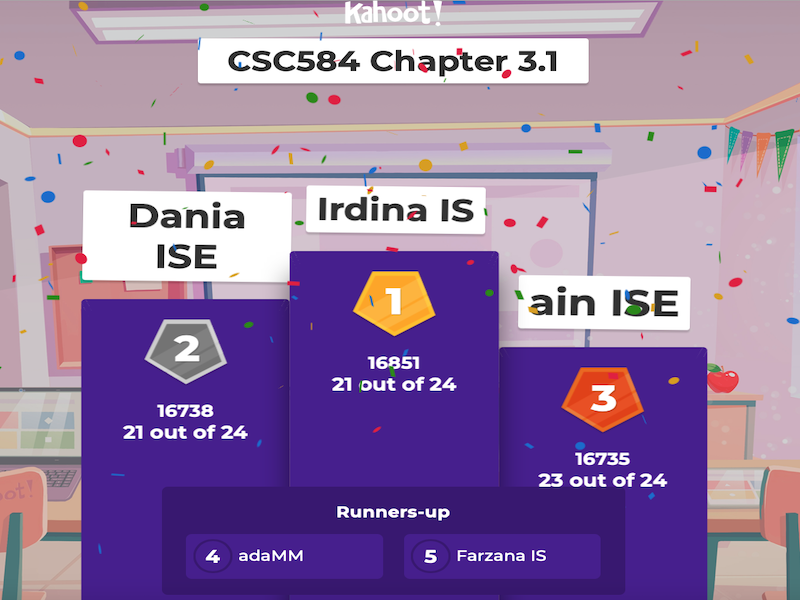
Chapter 3.1 – Web Component – HTML and Servlet

11-4 KAHOOT CHAMPION (CSC 584)-20234
111 KAHOOT CHAMPION (CSC 584)-20234
22-1 KAHOOT CHAMPION (CSC 584)-20234
2-3 KAHOOT CHAMPION (CSC 584)-20234

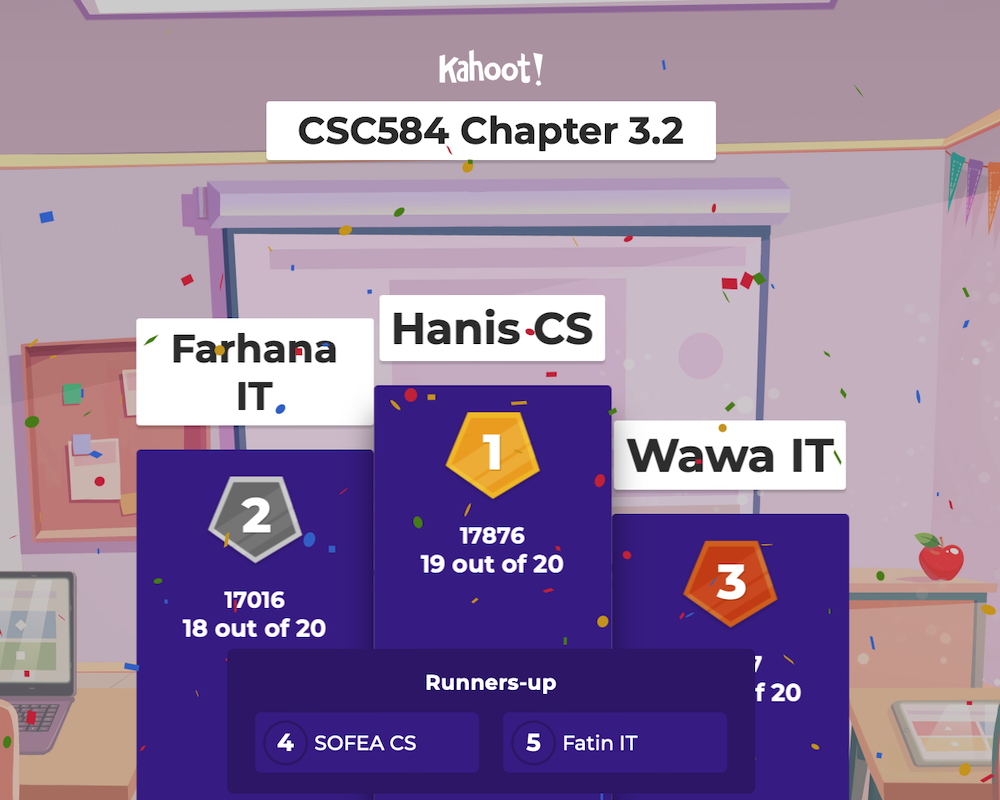
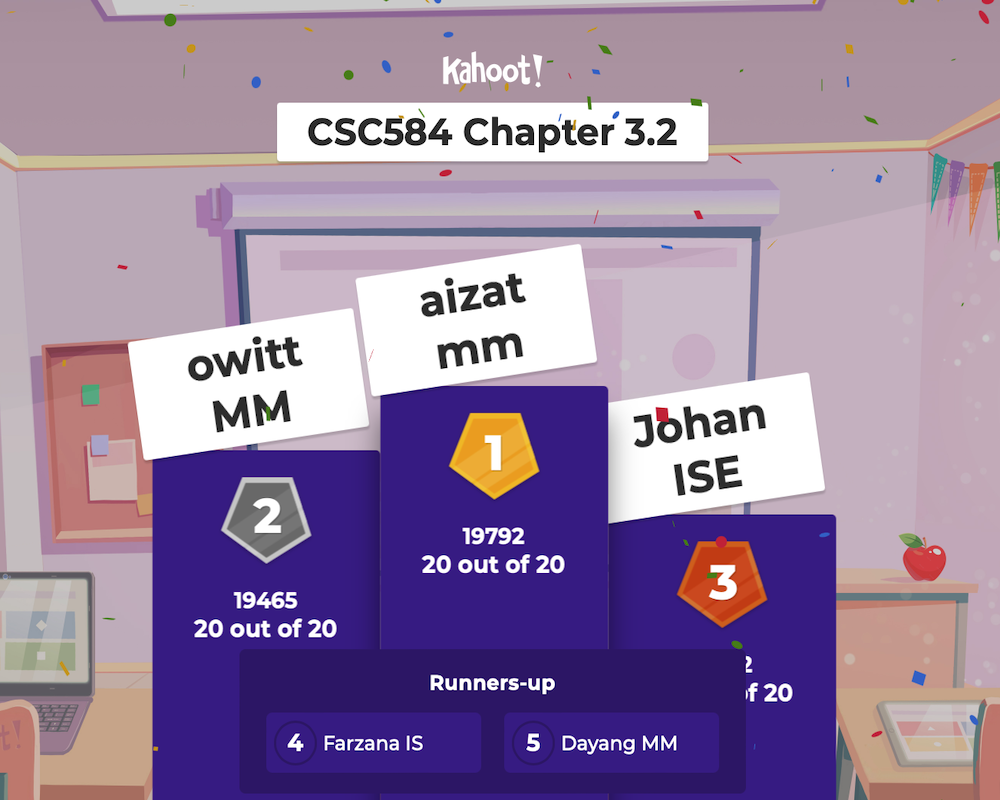
Chapter 3.2 – Web Component – HTML and Servlet

11 KAHOOT CHAMPION (CSC 584)-20234
1 KAHOOT CHAMPION (CSC 584)-20234
22-1 KAHOOT CHAMPION (CSC 584)-20234
2-1 KAHOOT CHAMPION (CSC 584)-20234

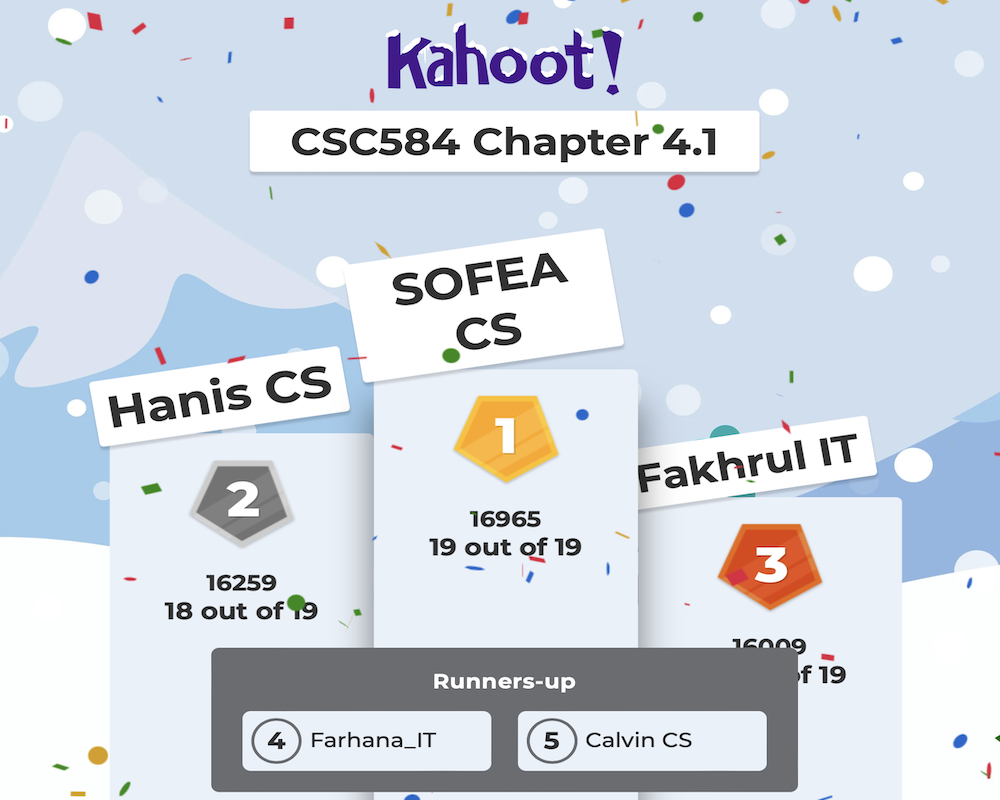
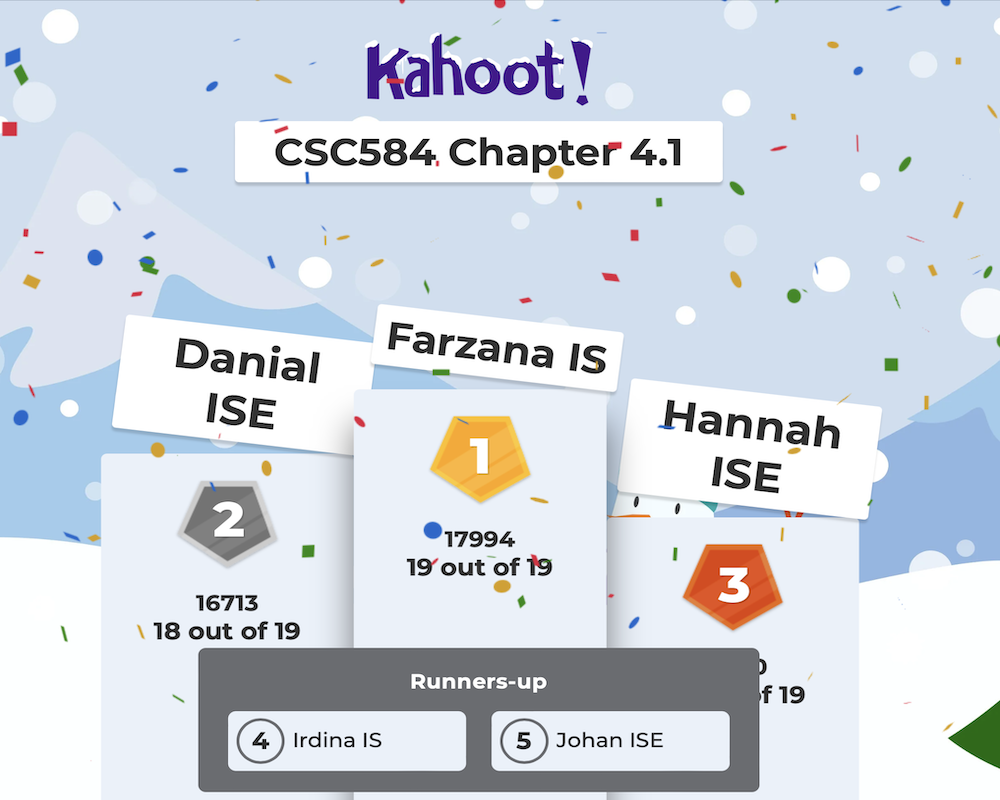
Chapter 4.1 – Web Component – Java Server Page (JSP)

1-1 KAHOOT CHAMPION (CSC 584)-20234
11-1 KAHOOT CHAMPION (CSC 584)-20234
2-2 KAHOOT CHAMPION (CSC 584)-20234
22-2 KAHOOT CHAMPION (CSC 584)-20234

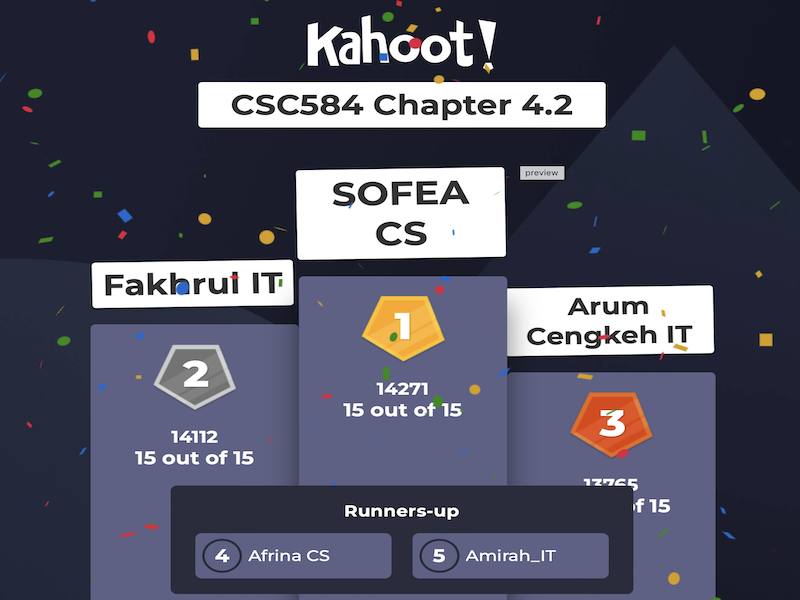
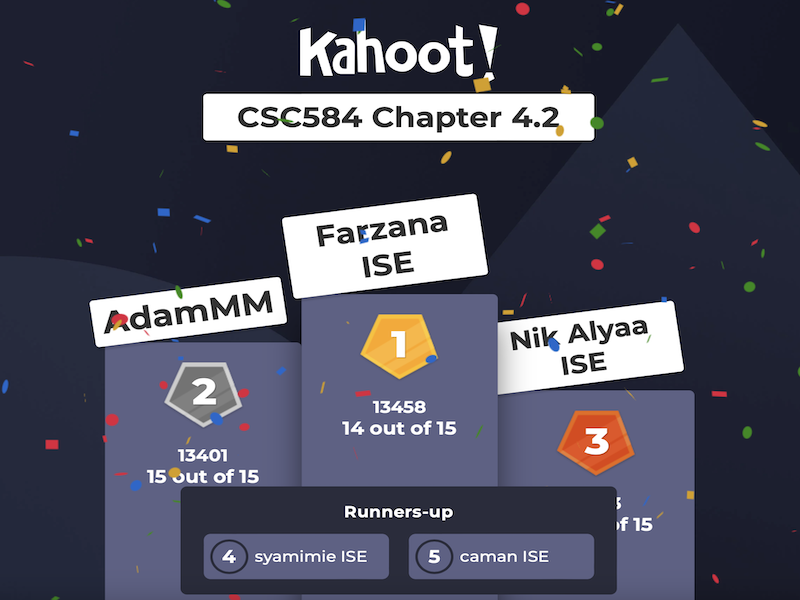
Chapter 4.2 – Java Server Page (JSP) 

1-2 KAHOOT CHAMPION (CSC 584)-20234
11-2 KAHOOT CHAMPION (CSC 584)-20234
22-3 KAHOOT CHAMPION (CSC 584)-20234
2-3 KAHOOT CHAMPION (CSC 584)-20234

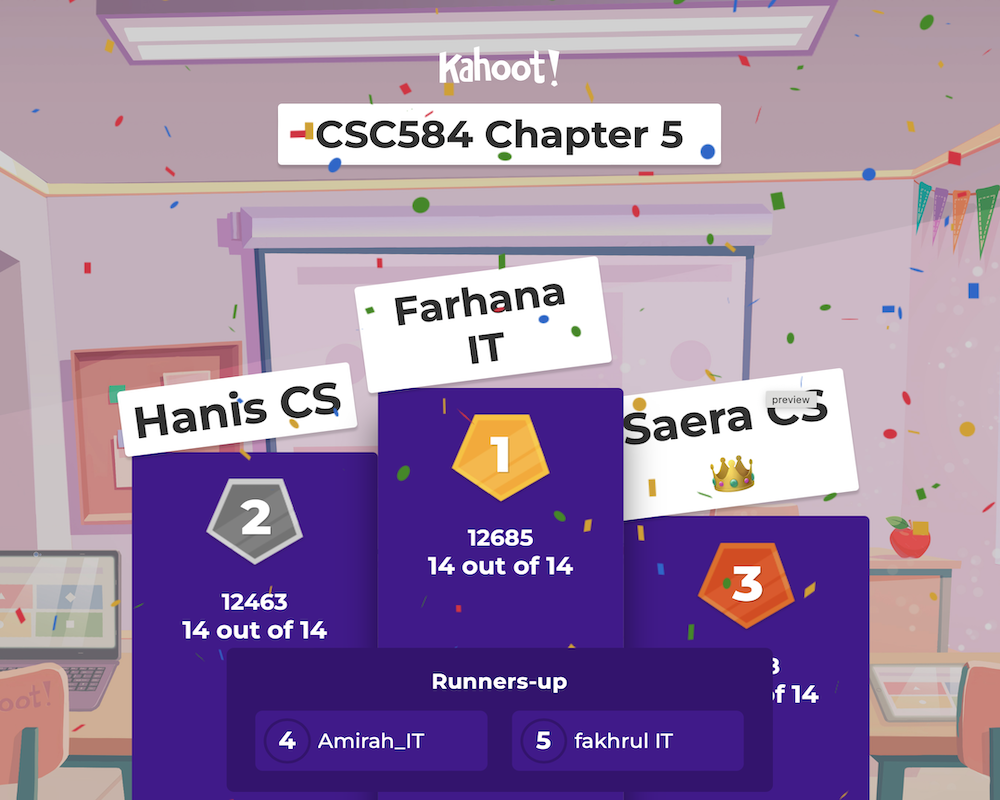
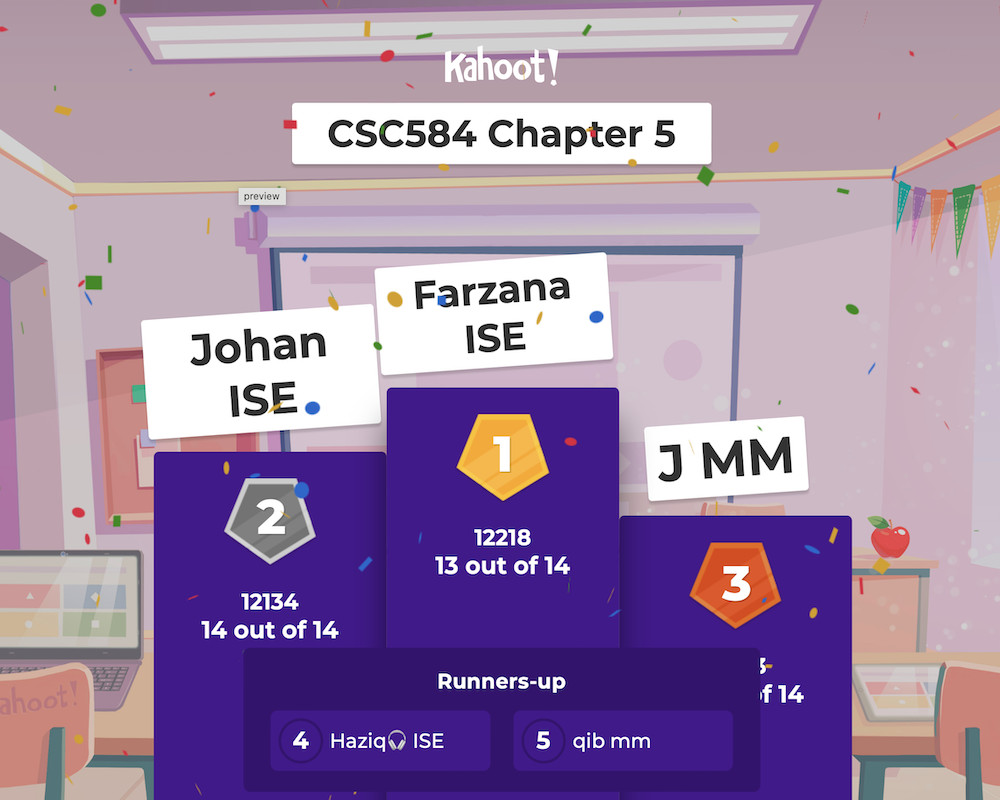
Chapter 5 – Java Database connectivity

11 KAHOOT CHAMPION (CSC 584)-20234
1 KAHOOT CHAMPION (CSC 584)-20234
22 KAHOOT CHAMPION (CSC 584)-20234
2 KAHOOT CHAMPION (CSC 584)-20234

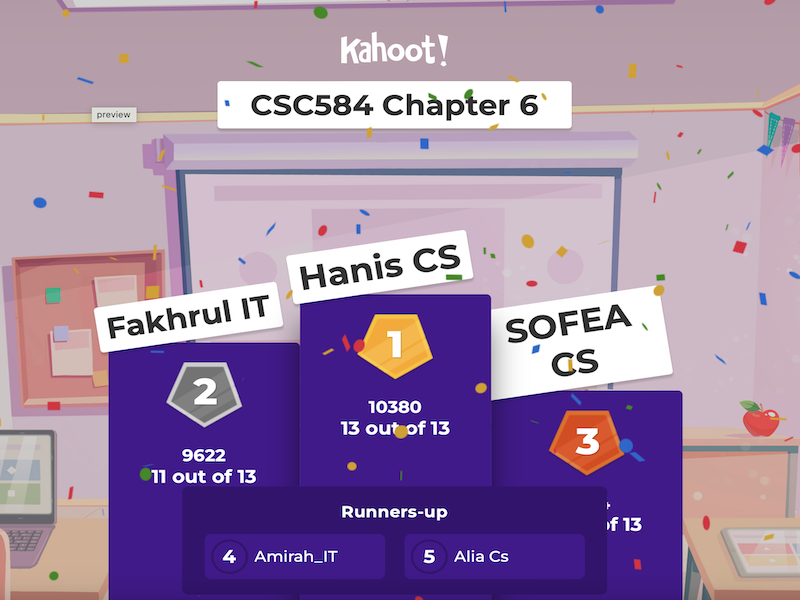
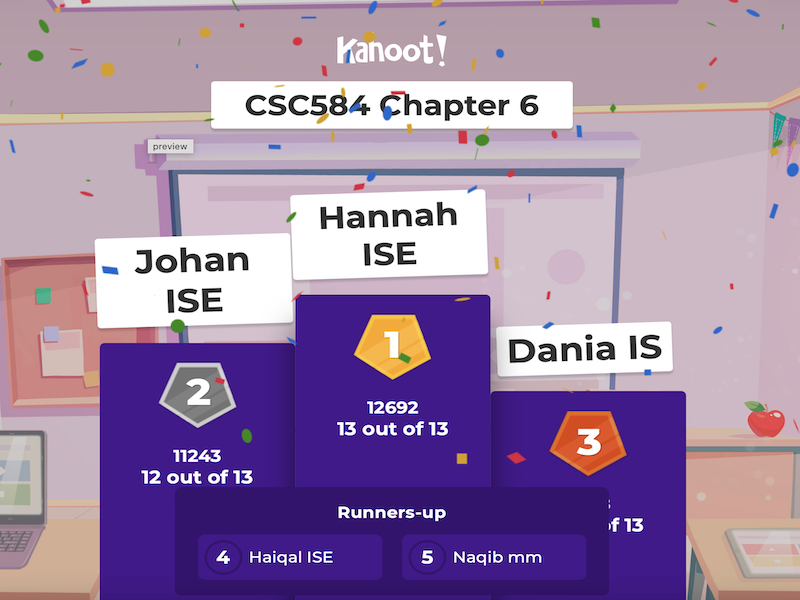
Chapter 6 – Enterprise JavaBean (EJB) Components

66 KAHOOT CHAMPION (CSC 584)-20234
6 KAHOOT CHAMPION (CSC 584)-20234
6-2 KAHOOT CHAMPION (CSC 584)-20234
66-1 KAHOOT CHAMPION (CSC 584)-20234

Chapter 7 – Development of Enterprise Application

77 KAHOOT CHAMPION (CSC 584)-20234
7 KAHOOT CHAMPION (CSC 584)-20234
7-1 KAHOOT CHAMPION (CSC 584)-20234
77-1 KAHOOT CHAMPION (CSC 584)-20234

Chapter 8 – Packaging and Deployment of Enterprise Application

11 KAHOOT CHAMPION (CSC 584)-20234
1 KAHOOT CHAMPION (CSC 584)-20234
22 KAHOOT CHAMPION (CSC 584)-20234
1-1 KAHOOT CHAMPION (CSC 584)-20234

Past Year Questions

11-1 KAHOOT CHAMPION (CSC 584)-20234
1-2 KAHOOT CHAMPION (CSC 584)-20234
22-1 KAHOOT CHAMPION (CSC 584)-20234
2 KAHOOT CHAMPION (CSC 584)-20234

Significance

Why you do the research.

Who can benefit.

GIve a group of user can benefit from the system/project.

Importance – What is the importance?

Usefulness – What is the usefulness of the project?

Benefit – What is/are the benefit (s)? Who benefits from the project?

WEB-BASED MERCHANDISE SYSTEM USING INTERACTIVE MULTIMEDIA

Through the proposed solution, the significance is that by incorporating interactive multimedia technologies to enhance user engagement and accessibility, the suggested solution advances the expanding sector of e-commerce. By concentrating on the particular requirements of university communities, this study fills in the gaps in the body of knowledge regarding the use of multimedia in online platforms. It furthers our understanding of user-centric design in specialised e-commerce contexts by providing insights into how sophisticated web design and multimedia concepts might address user behaviour and preferences.

Interactive elements allow users to experience products more fully than with static images. This helps customers make informed purchasing decisions, reduces return rates, and improves satisfaction. While, real-time inventory tracking and automated order management reduce the workload on club members by minimizing manual tasks. This efficiency helps the club to manage stock, anticipate demand, and avoid overselling. Also, a web-based for e-commerce provides a platform for digital marketing through newsletters, social media integration, and promotional events, which can boost engagement and attract new members.

The importance of this study in which it will be convenient to the users as it offers a simple, user-friendly portal for buying academic resources and items bearing the club’s logo. Customers don’t need to go to actual stores to browse, visualise, and buy products. A personalized web-based by making recommendations for products based on user preferences, the platform may increase user happiness and produce a more tailored experience. Also, the importance of this study promotes community development and institution branding by using multimedia to increase the exposure and attractiveness of items. A user-friendly and engaging e-commerce solution can boost sales, contributing to funding for campus initiatives or resources.

Last but not least, the benefits of this study are providing students and employees with a cutting-edge, practical, and entertaining platform for buying goods. Hence, it will promote income generating, operational effectiveness, and branding of the merchandise. E-commerce in a web-based fashion also will emphasise how interactive multimedia can improve niche platforms’ usability and attractiveness.

DREAMIES: COSMETIC RECOMMENDATION SYSTEM

The proposed platform is designed to solve problems that most makeup beginners face and is designed in an easy and user-friendly way. Dreamies acts as an intermediary between overwhelming choice and individual advice, helping users to choose suitable products. This project is important, since it will make the choosing of cosmetics easier. By grouping options into skin types and makeup preferences, Dreamies helps users avoid mismatched products, reduces frustration, and limits overall waste.

This platform helps users improve their knowledge of cosmetic products and makeup techniques, video tutorials and beauty tips , thus allowing them to do the makeup looks that they want and further build confidence in their skills. It also helps beauty educators, and influencers with a new, creative way of presenting product recommendations.This platform is to educate users on the importance of understanding their skin type and makeup needs in a fun and easy way. This project offers a platform where beginners are guaranteed safety, ease of use , and reliability in choosing makeup, thus aiding in informed decisions and instilling confidence in the beauty journey.

GAMIFIED LEARNING FOR FOUNDATIONAL LITERACY AND NUMERACY

From a game-based learning tool created in Bahasa Malaysia, this study proves that early childhood education positively influences by providing important support for young learners. Interactive game tools and game-based features encourage engagement, making literacy and numeracy skills accessible and fun. The design will include features for non-readers and beginners, encouraging independent learning in a localized environment. Additionally, by aligning content with students’ linguistic backgrounds, the tool promotes language development in a comfortable and familiar way.

This platform benefits educators by providing a versatile resource to support lesson planning and enable more personalized instruction. For parents who are not always familiar with new technology, a user-friendly dashboard will allow them to monitor their child’s progress and actively support learning at home. To sum up, this educational tool strengthens foundational skills, helps children for academic success, and enhances the quality of early learning both at home and in school.

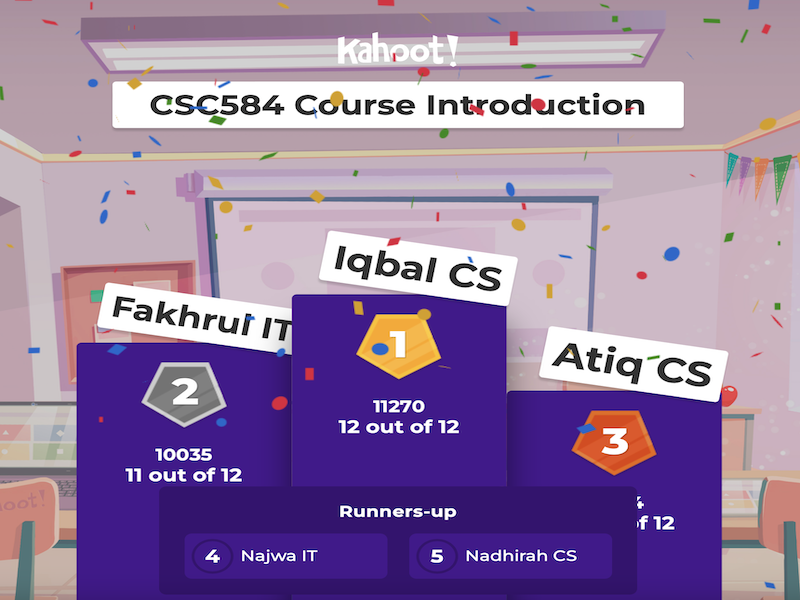
KAHOOT CHAMPION (MRD 501) – (20232)

Course Introduction

Screenshot-2023-03-22-at-12.50.17-PM KAHOOT CHAMPION (MRD 501) - (20232)
Screenshot-2023-03-22-at-12.49.47-PM KAHOOT CHAMPION (MRD 501) - (20232)

Chapter 1.1 – Introduction to Image Processing

1 KAHOOT CHAMPION (MRD 501) - (20232)
2 KAHOOT CHAMPION (MRD 501) - (20232)

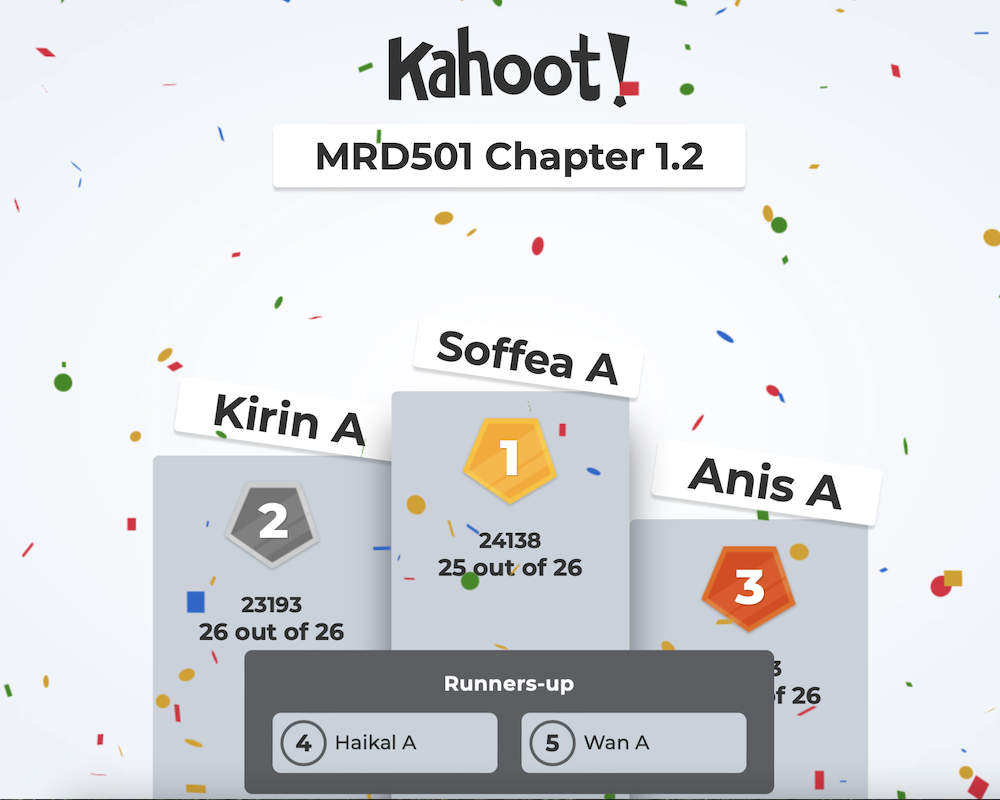
Chapter 1.2 – Introduction to Image Processing

Screenshot-2023-04-04-at-2.57.18-PM KAHOOT CHAMPION (MRD 501) - (20232)
Screenshot-2023-04-04-at-2.56.52-PM KAHOOT CHAMPION (MRD 501) - (20232)

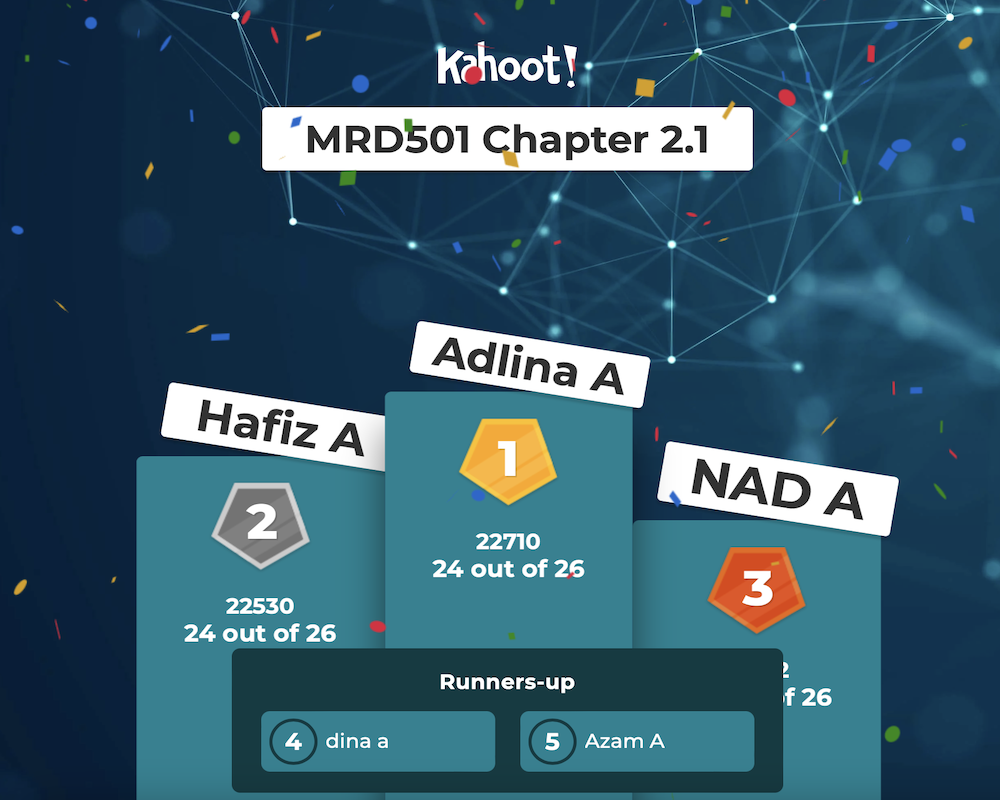
Chapter 2.1 – Image Enhancement

Screenshot-2023-05-10-at-8.59.52-AM KAHOOT CHAMPION (MRD 501) - (20232)
Screenshot-2023-05-10-at-8.59.29-AM KAHOOT CHAMPION (MRD 501) - (20232)

Chapter 2.2 – Image Enhancement

Screenshot-2023-05-08-at-12.05.42-PM KAHOOT CHAMPION (MRD 501) - (20232)
2.2 KAHOOT CHAMPION (MRD 501) - (20232)

Chapter 2.3 – Image Enhancement

Screenshot-2023-05-08-at-12.51.25-PM KAHOOT CHAMPION (MRD 501) - (20232)
2.3 KAHOOT CHAMPION (MRD 501) - (20232)

Chapter 3.0 – Frequency Filtering

Screenshot-2023-05-22-at-12.17.41-PM KAHOOT CHAMPION (MRD 501) - (20232)
Screenshot-2023-05-22-at-3.49.28-PM KAHOOT CHAMPION (MRD 501) - (20232)

Chapter 4.0 – Color Processing

Screenshot-2023-06-12-at-12.00.31-PM KAHOOT CHAMPION (MRD 501) - (20232)
Screenshot-2023-06-12-at-1.44.17-PM KAHOOT CHAMPION (MRD 501) - (20232)

Aim and Objectives

The aim of this Final Year Project is to clearly define the primary goal of the research by stating it in a concise, single sentence that captures the core purpose of the entire project. This aim serves as the foundation for all activities, development, and analysis carried out during the research, guiding the direction and focus toward solving a specific problem or achieving a particular innovation. By articulating a clear and focused aim, the project ensures alignment with its objectives and helps communicate its significance and intended outcomes to supervisors, examiners, and stakeholders.
To fulfill the aim of this Final Year Project, three key objectives have been established. The first objective is to conduct a comprehensive analysis of the problem domain and gather relevant user or system requirements to ensure the solution is aligned with actual needs. The second objective is to design and develop a working system or application that incorporates essential features, functionality, and user-friendly interfaces based on the gathered requirements. The third objective is to evaluate and test the developed solution through user feedback and performance assessments to validate its effectiveness, reliability, and potential for real-world application.

Objectives should contain 3 objectives.

  • 1) To study/examine/explore/find certain algorithm to solve the problem.
  • 2) To develop/construct/model/ app/system/game using the algorithm.
  • 3) To evaluate/test the functionality of the app/system

The objectives must tally with the problem statement and mention in details the implementation in the methodology.


This project aims to develop an interactive mobile game to hone English spelling skills among preschool students. The objectives of this proposal are:  

  1. To study the approach of interactive learning method by game-based learning.
  2. To develop an interactive spelling game for mobile.
  3. To test the functionality and usability of interactive spelling games.

This project aims to develop EV charging application in mobile platform. The objectives of this project are:  

  1. To study a suitable algorithm to find the nearest EV charging station.
  2. To develop the EV Charging Station Locator using Haversine Distance algorithm for distance calculation.
  3. To test the functionality of the EV Charger Station Locator mobile application.

This project aims to develop facial expression recognition for drowsiness detection in mobile platform. The main objectives of this project are: 

  1. To study the suitable facial expression recognition algorithm for mobile application.
  2. To design and develop driving alert system based on facial expression recognition.
  3. To test the functionality of facial expression recognition on mobile application.

This project aims to develop a mobile application personalized stylist recommender system using AI specifically for the fashion domain to provide tailored outfit suggestions and improve wardrobe utilisation. Thus, the objectives include: 

  1. To identify a suitable AI-driven recommendation approach in personalized fashion recommendations and wardrobe management. 
  2. To construct a mobile application personalized stylist recommender system for generating outfit suggestions and managing wardrobes based on the identified approach. 
  3. To evaluate the performance of the recommender system using relevant evaluation metrics. 

This project aims to develop an Interactive Tajwid Memorization Mind Map Game specifically for primary school students preparing for PSRA exams, students with general memorization difficulties and ADHD to enhance their memorization and retention skills in the Tajwid subject. Thus, the objectives include to:  

  1. To identify suitable approach to enhance memorization in Tajwid subject. 
  2. To develop a web-based interactive Tajwid mind map memorization game. 
  3. To evaluate the game’s effectiveness in improving Tajwid memorization of students. 

 GAMIFIED LEARNING FOR FOUNDATIONAL LITERACY AND NUMERACY: A GAME FOR MALAYSIAN CHILDREN AGED 7 

This project is focusing on developing a game specifically for foundational literacy and numeracy to provide an engaging, interactive platform that nourishes reading, writing, and counting skills in a structured and enjoyable way for young learners. Thus, the objectives include to: 

  1. To identify the elements of game-based learning in enhancing foundational literacy and numeracy skills.  
  2. To develop game-based learning by using K-Nearest Network (KNN) to enhance foundational literacy and numeracy skills  
  3. To test the functionality and usability of game-based learning by using K- Nearest Network.  

 WEB-BASED MERCHANDISE SYSTEM USING INTERACTIVE MULTIMEDIA 

In order to overcome the problem in e-commerce web-based platforms, this project aims to develop a web system specifically for web-based merchandise by using interactive multimedia methods. Thus, the objectives include to:  

  1. To identify suitable 3D features in e-commerce system.  
  2. To develop merchandise web-based using 3D features.   
  3. To evaluate the functionality of the system.  

WEB-BASED MERCHANDISE SYSTEM USING INTERACTIVE MULTIMEDIA 

The project aims to create a corrosion classification system designed specifically for the oil and gas sector that uses image processing and Transfer Learning to automatically recognise and evaluate corrosion from images of equipment surfaces. Therefore, the objectives include the following:  

  1. To identify machine learning algorithms for classifying early corrosion in land-based image data.   
  2. To develop CorroSense that can analyze image data by Transfer Learning.    
  3. To evaluate CorroSense using performance metrics across diverse environmental conditions and image qualities.